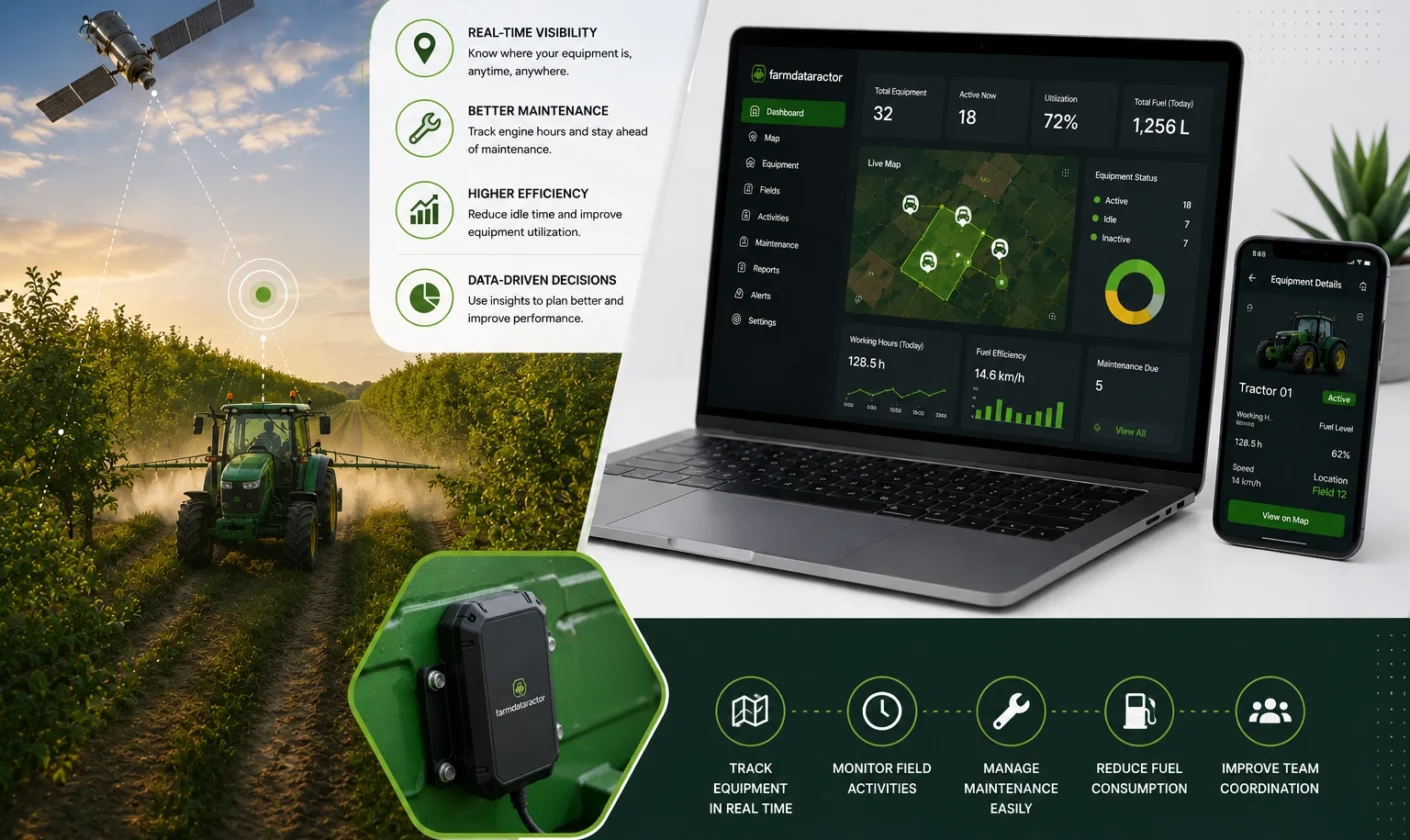
Modern farming depends on more than machinery alone. Tractors, sprayers, harvesters, seeders, irrigation systems and other equipment are constantly moving across fields and job sites. Without accurate visibility, farm managers often rely on phone calls, manual records and assumptions to understand what is happening in the field.
This is where farm equipment monitoring becomes essential.
Equipment monitoring allows farmers to track machine activity, location, operating hours and field operations in real time. By collecting data directly from connected equipment, farms can improve efficiency, reduce downtime and make better operational decisions.
The Challenges of Managing Equipment Manually
Many farms still manage machinery using spreadsheets, notebooks or verbal communication. While this approach may work on a small scale, it becomes increasingly difficult as operations grow.
Common challenges include:
- Not knowing where equipment is located
- Difficulty tracking working hours
- Missed maintenance schedules
- Unclear operator activity
- Inefficient field planning
- Delayed response to equipment issues
These problems often lead to higher operating costs and reduced productivity.
The Benefits of Equipment Monitoring
Knowing where every machine is located at any moment helps managers coordinate field operations more effectively.
GPS-based monitoring makes it possible to:
- View equipment locations on a map
- Track movement history
- Monitor active and inactive machines
- Improve fleet utilization
This visibility helps eliminate unnecessary delays and improves overall farm coordination.
Better Maintenance Planning
Unexpected equipment failures can be costly during critical farming seasons.
Monitoring systems help farms:
- Track engine hours
- Schedule preventive maintenance
- Reduce unexpected breakdowns
- Extend equipment lifespan
Preventive maintenance is almost always less expensive than emergency repairs.
Improved Operational Efficiency
When managers can see equipment activity in real time, they can make better decisions regarding task assignments and field operations.
Benefits include:
- Faster task coordination
- Reduced idle time
- Improved workforce productivity
- More efficient use of equipment
The result is better performance across the entire operation.
Data-Driven Decision Making
Equipment monitoring generates valuable operational data that can be analyzed over time.
Farm managers can identify:
- Underutilized equipment
- High-performing assets
- Operational bottlenecks
- Seasonal performance trends
These insights help improve future planning and investment decisions.
How farmdataractor Supports Connected Farm Management
farmdataractor provides a centralized platform that connects equipment, field operations and farm teams through real-time data.
Using GPS tracking, IoT connectivity and operational monitoring tools, farmdataractor helps farmers:
- Track equipment locations in real time
- Monitor field activities
- Manage farm tasks and operations
- Improve maintenance scheduling
- Access operational insights from anywhere
Instead of relying on fragmented information, farmers gain a complete view of their operation through a single platform.
The Future of Farm Operations
Agriculture is becoming increasingly data-driven. Farms that embrace connected technologies are better positioned to improve productivity, reduce costs and respond quickly to operational challenges.
Equipment monitoring is no longer a luxury feature. It is becoming a core requirement for efficient farm management.
By combining real-time visibility with actionable insights, platforms like farmdataractor help modern farms operate more efficiently and make smarter decisions every day.